
November 3, 2026 · By Lauren Lux
Buying a Lake Murray Home with a Seawall
Buying a Lake Murray home with a seawall starts with the bank you will actually walk, not with a photo of a neat edge. A built wall, riprap, and a shoreline that has not been hardened are different structures, and a listing can mix the words. Confirm any shoreline work, the permits, and the dock and shoreline rules with Dominion Energy's Lake Murray shoreline management, and confirm the condition with a licensed inspector and with a contractor who works on this kind of bank. A permit file and what you see can disagree. The dock in front of that bank is a related question, not the same structure. I will not invent a repair cost, a permit fee, a replacement number, or a legal rule and call it a fact. Call or text (803) 569-7595.
I am Lauren Lux, REALTOR® | Coldwell Banker Realty. I'm a multi-generational Lexington native. I grew up here, including a lot of time on Lake Murray, taught fourth grade, and started in real estate in August 2022. As of 2026, I've helped more than 150 families. I will not invent a coverage limit, an approval, or a pass and call it a fact. Tell me what you saw at the water. Then we check this bank.
The paper list, before you fall in love with a straight edge, is buying Lake Murray waterfront. What the seller should already have in the file, including the dock and shoreline papers, is dock papers before you list. What a licensed inspector should be asked to cover, including the dock and the shoreline, is Lake Murray home inspections for buyers. If the search is really the pier, the lift, and the slip, read buying a Lake Murray home with a boat dock. This post is the bank: the wall, the rock, and the other shoreline work. It does not replace those. Start with the Lake Murray overview. If the lot touches the water, the map page is waterfront homes, and the longer shoreline notes are the waterfront guide. The purchase walkthrough is the Lake Murray buying guide. The search starts on the buy page. If you are selling a lake house to buy this one, the listing side is the sell hub.
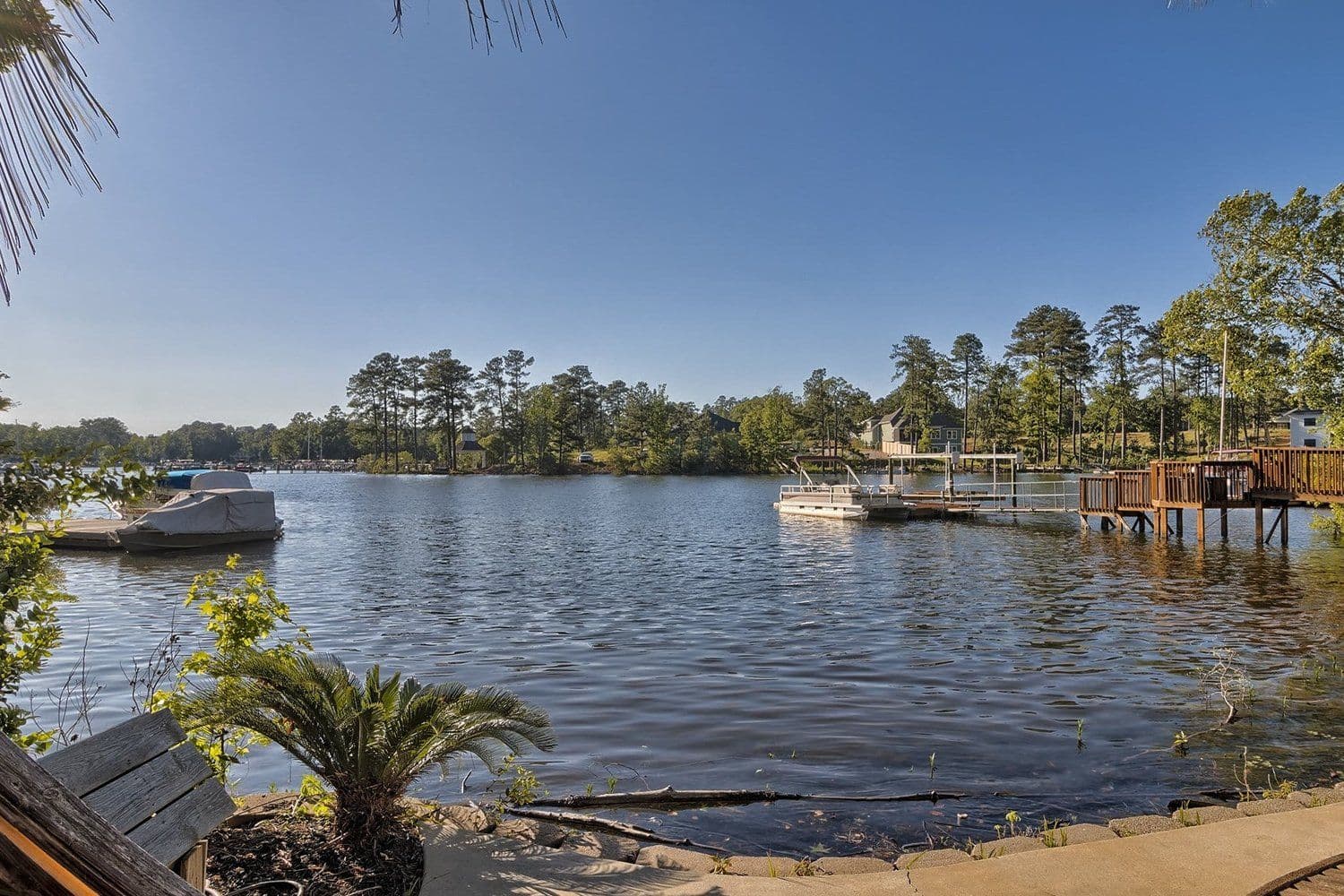
The photo on this post is lifestyle photography. It is not a Lake Murray address, and it is not a sold house.
Name the bank before you name the house
People say seawall and mean several things they can point at on a Saturday. Sort them on the lot you are buying.
- A seawall: a built wall at the water's edge. You can see a face, a top, and ends. You can also see a lean, a gap behind it, or a place where the yard has washed toward the water. I am describing what a walk can show. I am not defining an engineering standard.
- Riprap: rock placed along the bank. It can look tidy in a photo and moved, thin, or piled when you stand on it. Rock and a wall can sit on the same lot. They are still not the same thing.
- A bank that has not been hardened: soil, plants, roots, or a slope down to the water. That can be what you want. It can also be a bank that is moving. The photo does not decide which.
- A mix, or work added later: a wall in one stretch, rock in another, a patch that does not match the rest, or something a previous owner added after the paper was drawn. The file has to be asked about that, not assumed.
Shoreline stabilization is the broader phrase buyers hear. It is not a brand, and it is not proof the work was allowed or that it will hold. I will not tell you which method is better. I will not invent a cost for any of them. I will help you name what you walked so the questions go to the right people.
A listing photo can also be the neighbor's bank, a community edge, or a stretch that does not belong to this lot. Ask whose shoreline you are looking at before you write a number.
Waterfront, lake view, water-access, and inland are still four different houses. A wall or riprap you can walk from this backyard is a waterfront question. A view across the cove is not your bank. A shared ramp is not your seawall. If you only need to see the water, read buying lake-view homes on Lake Murray. If a shared ramp is the plan, read buying water-access homes on Lake Murray. The four words are waterfront vs lake view.
Confirm the work, the permits, and the rules
On Lake Murray, confirm any shoreline work, the permits, and the dock and shoreline rules with Dominion Energy's Lake Murray shoreline management. Treat that as a verification step on this lot, not as a slogan in the listing.
Ask, and let them answer:
- Whether a permit exists for this shoreline, this wall, this riprap, and this dock
- Whether it is current
- Whether it matches what you walked, including work added later
- What the file allows you to keep, repair, or change
- How a dock, a lift, or a cover sits in that same conversation, if the pier is part of the purchase
I will not state a rule, a fee, an approval, or a timeline. The people who hold the file answer those questions. If the seller cannot produce paperwork, that is information. We slow down. I help you gather the questions. I do not give legal advice.
Dock and shoreline rights belong with documents and a South Carolina attorney. A careful file can still sit on a structure that is tired. A tired structure can still have a current file. I will not tell you which finding wins. I will help you put both in front of Dominion Energy's Lake Murray shoreline management, the inspector, the contractor, and the attorney where the question is a right.
An HOA, if there is one, is a different paper. Ask whether the documents say something about walls, rock, docks, or shoreline work. You may need the association and the shoreline file to agree. No HOA does not mean no rules. The shoreline conversation still applies. I will not tell you what an HOA allows.
The seller-side version of gathering that folder is dock papers before you list. The buyer checklist that sits next to it is buying Lake Murray waterfront. Read both. This post stays on the bank.
What a walk can show, and what it cannot
You can see a lot before anyone writes a report. Walk from the house to the water the way you would on a Saturday.
Look at the face of a wall, the top, the ends, and the ground behind it. Look at whether rock is still where it was placed, or scattered. Look at erosion, a lean, a gap, a soft spot, and a stretch that does not match the rest of the bank. Look at how the dock, if there is one, meets that same edge. I am not the inspector. I will not tell you a wall passes. I will not tell you riprap is fine because it looks heavy. I will not invent a repair cost.
A walk also cannot tell you the permit. A neat edge can be unpapered. A tired edge can match an older file that still needs a question. Condition and permission are two conversations. Do both.
If you are comparing two coves, walk both banks. A neighbor's wall is not this lot's wall. A main-channel edge and a protected cove can show you different weather on the same Saturday. That is a reason to look. It is not a ranking I will invent.
Inspectors and contractors
A general home inspection may stop at the house. Ask, in writing, what the report includes and what it leaves out. On a shoreline purchase, the leave-out list is often the dock, the lift, the seawall, the riprap, and sometimes the septic or the well if the house uses them. If the license stops at the living space, hire the person who looks at shoreline structures.
The inspector and the contractor are not Dominion Energy's Lake Murray shoreline management. One can describe what they see. The other answers the permit and the rules for this lake. You want both. You also want your insurer to say how the policy treats the wall, the rock, the dock, and the other structures. I will not invent a premium, a coverage limit, or a replacement cost. Your insurer confirms dollars.
The longer version of the inspection conversation is Lake Murray home inspections for buyers. Use it, and then add the bank questions this house actually has.
The dock and the bank are one shoreline
A pier in the photo does not answer the wall, and a wall does not answer the pier. They often share a walk. They can sit in the same file or in different papers. Confirm both.
Ask whether the dock you walked matches the sketch, including lifts, covers, and anything added later. Ask how the wall or the rock meets the pilings. Ask who is allowed to use the dock. The boat-dock notes are buying a Lake Murray home with a boat dock. Read them if the slip is why you came. Stay on this post for the bank those pilings sit against.
I will not tell you a dock makes a seawall permitted, or that a seawall makes a dock sound. Those are separate confirmations with Dominion Energy's Lake Murray shoreline management and with the people who inspect the structures.
When the water is lower, you see more of the edge
Lake Murray is a working reservoir. The level changes, and people who live on it plan around that, including seasonal drawdowns. I grew up on this lake. I still will not state a level, a date, or a depth in feet and call it your bank.
When the water is lower, you can often see more of the base of a wall, the toe of the rock, the ends, and whether the soil behind the edge is staying put. A bright, high Saturday can hide that. It can also hide how a dock sits when the lake is down. That is a reason to ask, and a reason to walk when you can. It is not a number I will invent for the whole lake.
Do this instead:
- Walk the bank yourself.
- Ask what this exact shoreline looks like when the water is lower, not only on the day of the photo.
- Check Dominion Energy's current Lake Murray level information. Their level is the lake. It is not automatically the condition of this wall.
- Have the bank, the rock, and the dock confirmed for this property with an inspector or a shoreline contractor, and with the permit file.
- If you can walk it in the off-season, the notes on what that season shows are buying on Lake Murray in fall and winter. The in-season walk is buying on Lake Murray in spring and summer. Neither post quotes you a level.
Flood questions are their own lookup. I will not guess a flood zone from a photo of a wall. Confirm the address with your insurer, your lender if there is a loan, and your closing attorney. I will help you remember to ask.
How we use this on a real house
Tell me whether the lot has to touch the water, and whether you already know the bank has a wall, rock, or a slope you need explained. Then we look.
Go to the buy page and fill out the questionnaire. We complete a buyer profile. We sign a buyer agency agreement. Then I search listed homes, and I can look off-market after that paperwork is done.
The longer purchase walkthrough is the Lake Murray buying guide. When you want to talk through a specific bank, contact me.
If you need a local lender, I recommend Jason Burns at Guild Mortgage, (803) 210-7999. I will not quote a rate, a fee, or a payment.
I will not invent a typical seawall price, a riprap price, or a waterfront price. Send the kind of lot you want. I'll pull comps that match the water you are actually buying, and call you.
Call or text (803) 569-7595. We'll check the bank and the papers first, then decide whether to offer.
Questions
What should I check before buying a Lake Murray home with a seawall?
Walk the bank. Ask whether the papers match the wall, the rock, the dock, and the shoreline you can see. A built wall, riprap, and a bank that has not been hardened are different things. Then ask a licensed inspector what is in scope, and ask a contractor who works on this kind of shoreline what they see. Confirm any shoreline work, permits, and dock and shoreline rules with Dominion Energy's Lake Murray shoreline management and with this property's records. I will not invent a repair cost, a permit fee, or a rule.
Is riprap the same as a seawall?
No. People use seawall for a built wall at the water's edge and riprap for rock placed along the bank. A listing can use one word for the other, or for a mix, or for a bank that has slumped. Shoreline stabilization is the broader phrase. It is not a promise that the work was permitted or that it is sound. Confirm what is actually there, and confirm the file, with Dominion Energy's Lake Murray shoreline management and with an inspector or contractor. I will not rank one method over another, and I will not invent a cost.
Does a seawall in the listing photo transfer with the house?
Not as a slogan I will invent. A photo is not a permit and it is not a right. The wall or the rock you walked may sit on this lot, on a neighbor's bank, or in a picture that does not match the file. Confirm whether a permit exists, whether it is current, and whether it matches the shoreline, the dock, and any later work. On Lake Murray, confirm that with Dominion Energy's Lake Murray shoreline management. Dock and shoreline rights belong with documents and a South Carolina attorney. I help you gather the questions. I do not give legal advice.
Will a home inspection cover the seawall or the riprap?
Do not assume it does. Ask the licensed inspector, in writing, what is in scope. If the report stops at the house, hire the contractor or specialist who looks at shoreline structures. The permit file is a separate step. Dominion Energy's Lake Murray shoreline management answers the shoreline rules. The inspector and the contractor answer what they can see. I am not the inspector, and I will not invent a pass, a fail, or a repair cost.
Who do I ask about shoreline permits and dock rules?
Confirm any shoreline work, the permits, and the dock and shoreline rules with Dominion Energy's Lake Murray shoreline management and with this property's records. Ask your inspector and a shoreline contractor about condition. If there is an HOA, read those rules too. An association rule and a shoreline file are not the same paper. A South Carolina attorney reads the rights. I help you collect the questions. I do not give legal advice, and I will not state a fee, a timeline, or an approval.
How do I start a seawall search with Lauren?
Fill out the questionnaire on the buy page. We complete a buyer profile and sign a buyer agency agreement before we tour. Tell me whether the lot has to touch the water, and whether a wall, riprap, or a natural bank is part of what you need to understand. If you need a local lender, I recommend Jason Burns at Guild Mortgage, (803) 210-7999. Call or text (803) 569-7595.
Want to apply this to your street?
Would you like me to apply this to your street? Let me know if you have any questions!