

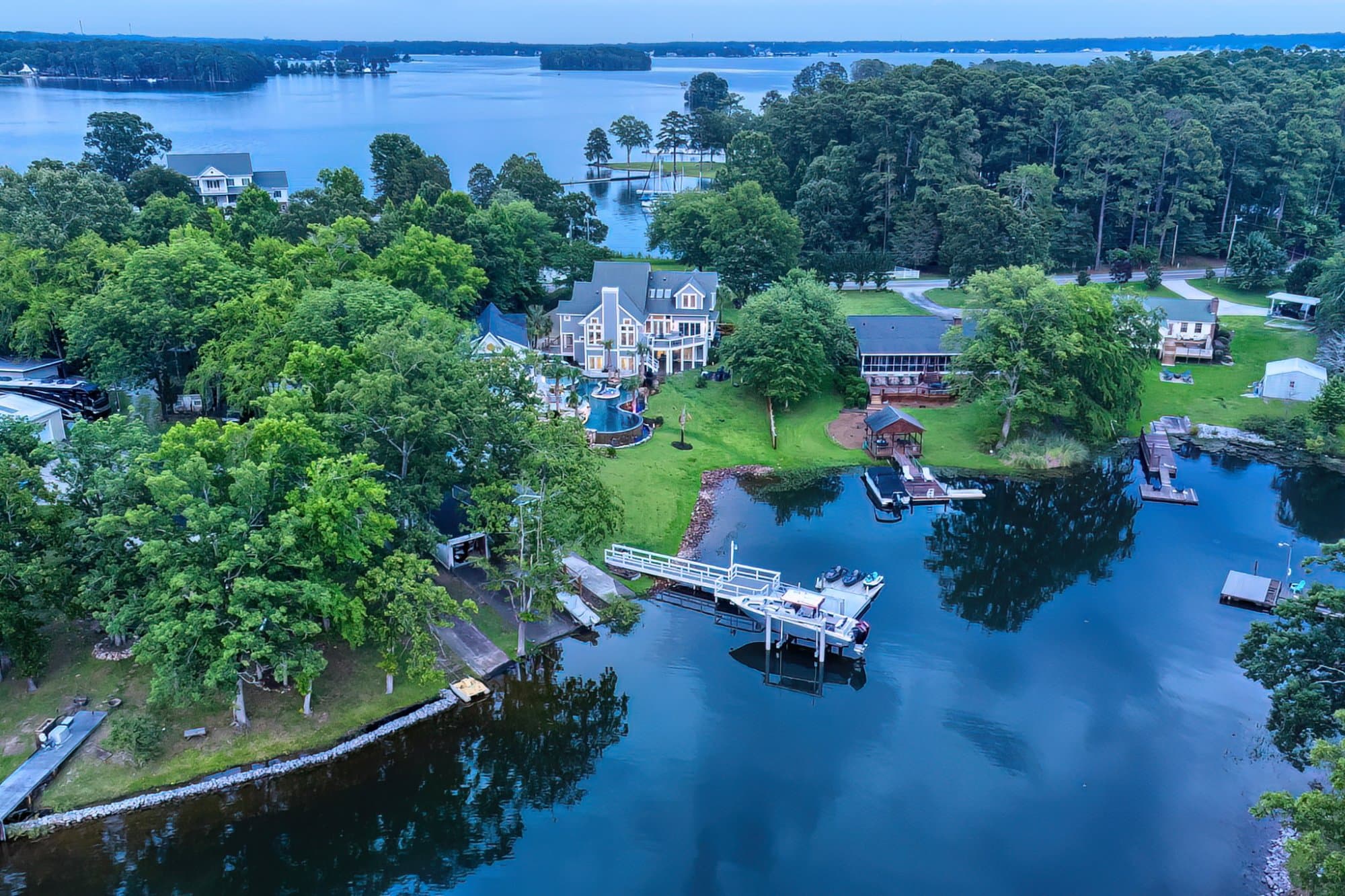
Lake Murray
The Lake Murray Waterfront Guide: Docks, Water Levels & What's Underground
Lake Murray is a federally licensed hydroelectric project run by Dominion Energy, so the water level, your dock, and even your septic system are governed by rules most buyers never hear about until they're mid-transaction. Here's what actually matters.
Written by Lauren Lux, REALTOR® with Coldwell Banker Realty. Last updated August 2026.
Why does the water level change?
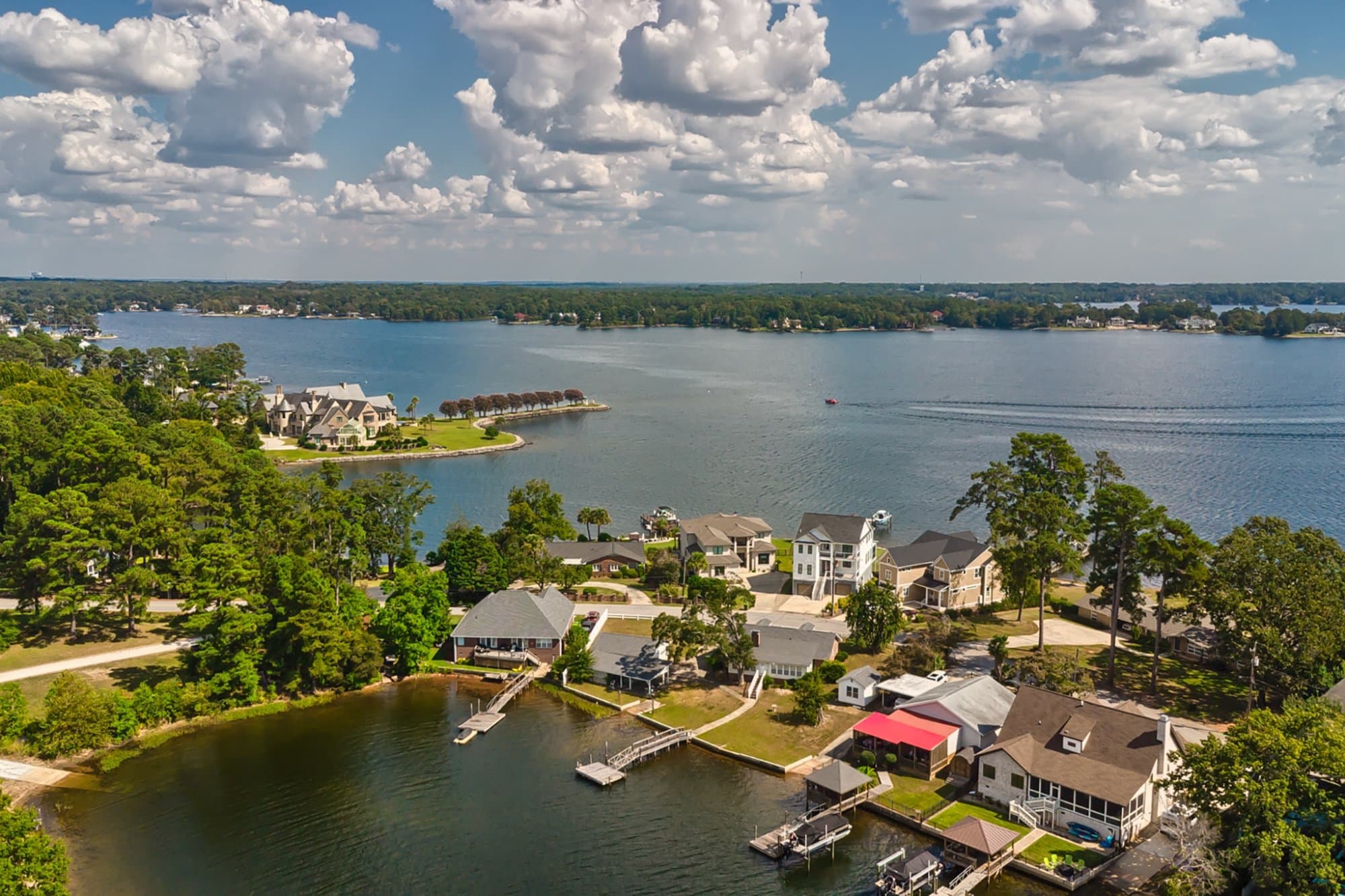
Full pool is 360 feet. Normal operating level runs around 358 feet, with a natural two-to-three-foot seasonal swing down to about 355 feet in fall and winter, this is expected and factored into how docks and lifts are built. Every three to five years, Dominion performs a full "drawdown," lowering the lake to roughly 350-354 feet for maintenance, typically between October and early spring. A drawdown is disruptive to the shoreline view, but it's also the only window to inspect pilings, repair a seawall, or service a dock. Dock repair companies routinely book out 6-9 months ahead of a scheduled drawdown, so if one's coming, get on a schedule early.
How do dock permits actually work?
You don't own the lake bottom below the 360-foot line. What you have is a Shoreline Use Permit from Dominion Energy, and it comes with real limits:
- A minimum of 100 feet of shoreline for an individual residential dock permit (some lots platted before 1989, between 50 and 100 feet, may be grandfathered, but verify this directly rather than assuming)
- Docks are capped at 750 square feet and 75 feet in length, and can't extend more than a third of the way across a cove or channel
- One boat lift and two personal watercraft lifts per permit
- All floating sections built since January 1, 2007 must use encapsulated flotation
The permit does not automatically transfer with the deed. Before you close, verify the permit is current and that the physical dock matches the sketch on file. Unauthorized additions built by a previous owner can become the new owner's problem, sometimes requiring removal at your expense before a new permit is issued.
What's under the yard: septic, wells & buffer zones
A lot of what matters on a Lake Murray lot is invisible from the street.
Septic: State guidelines assume 120 gallons per bedroom per day, so adding a bedroom can require a larger drain field than what's currently permitted. Before you buy, pull the original SCDES permit to confirm exactly where the tank and drain lines sit, so you never build over them, and get a pump-out and inspection to check structural integrity.
Wells (west side properties): Get the flow rate tested in gallons per minute, not just a basic bacteria test, so you know the well can actually handle peak demand, and test for mineral content and pH.
The 75-foot vegetated buffer: On land sold after 2007 especially, you generally can't clear or "improve" the buffer zone near the shoreline without a permit. It's split into three 25-foot tiers, with limited thinning sometimes allowed in the back 50 feet. In practice, this acts as a 75-foot setback for anything permanent, a gazebo, a fire pit, a guest house, so factor it in before you fall in love with a building plan.
Do I need flood insurance on a Lake Murray home?
It's optional for most owners, but strategic. About 90% of Lake Murray properties sit in FEMA Zone X, meaning less than a 0.2% annual flood chance, so a lender won't require it. A "preferred risk" policy in that zone typically runs $700-$1,500 a year, which is inexpensive relative to the exposure of a dock, boat lift, and seawall that can easily exceed $100,000 in replacement value. Confirm your homeowners policy's "Coverage B" (other structures) explicitly includes them; a lot of buyers assume it does and find out otherwise after a storm.
Beyond the homeowners policy, plan for a minimum $1M personal umbrella policy, standard advice for any waterfront owner, and a separate marine policy with agreed-value coverage if you own a boat, since a standard homeowners policy typically won't cover fuel spills or wreckage removal.
Budgeting for upkeep
A reasonable annual reserve for a well-maintained Lake Murray home is 1.5-2% of its value. On a $1M property, that's $15,000-$20,000 a year, and it breaks down roughly like this:
| Dock maintenance | $500-$1,500 |
|---|---|
| Boat lift service | $250-$500 |
| Seawall reserve | $1,000/year (replacement runs $150-$800 per linear foot) |
| Septic pumping | $300-$500 every 3-5 years |
| HVAC servicing | $300-$500 |
| Termite bond | $300-$600 |
| Boat upkeep (the "10% rule") | 10% of the boat's value annually, insurance, fuel, and maintenance included |
This is the part of buying on the water that catches people off guard. I'll walk your specific property's dock permit, septic, and buffer situation before you're locked into a contract. Call or text (803) 569-7595.
This is the part of buying on the water that catches people off guard.
I'll walk your specific property's dock permit, septic, and buffer situation before you're locked into a contract.