
October 31, 2026 · By Lauren Lux
Buying a Lake Murray Home with a Septic System
Buying a Lake Murray home with a septic system starts with this lot, not with a rule I will paste on every cove. Many houses around the lake are on septic because public sewer does not reach every shoreline and every quieter road. Some streets are on public sewer. The listing photo does not answer which one you are walking. Ask where the tank and the drain field sit, including how the field sits relative to the water, and ask for pumping records and a septic inspection. A bedroom count and an addition can change what the system is permitted for. Confirm the requirements for this property with a licensed inspector and with the county and SCDES, the state environmental agency. I will not invent a cost, a setback, a pumping schedule, or a gallon number. Call or text (803) 569-7595.
I am Lauren Lux, REALTOR® | Coldwell Banker Realty. I'm a multi-generational Lexington native. I grew up here, including a lot of time on Lake Murray, taught fourth grade, and started in real estate in August 2022. As of 2026, I've helped more than 150 families. I will not invent a tank size, a repair invoice, or a pass/fail and call it a fact. Tell me whether septic is acceptable, and which lake word has to be true. Then we check this house.
This post is the septic system, next to the lake words. What a licensed inspector should be asked to cover on the house, the dock, and the shoreline is Lake Murray home inspections for buyers. If the lot has to touch the water, the paper list is the waterfront checklist, and the longer shoreline notes are the waterfront guide. This post does not replace those. It adds the septic questions. Start with the Lake Murray overview. The purchase walkthrough is the Lake Murray buying guide. If the house is inland and the lake is a plan, read buying inland homes near Lake Murray. The search starts on the buy page. If you are selling a house to buy this one, the listing side is the sell hub.
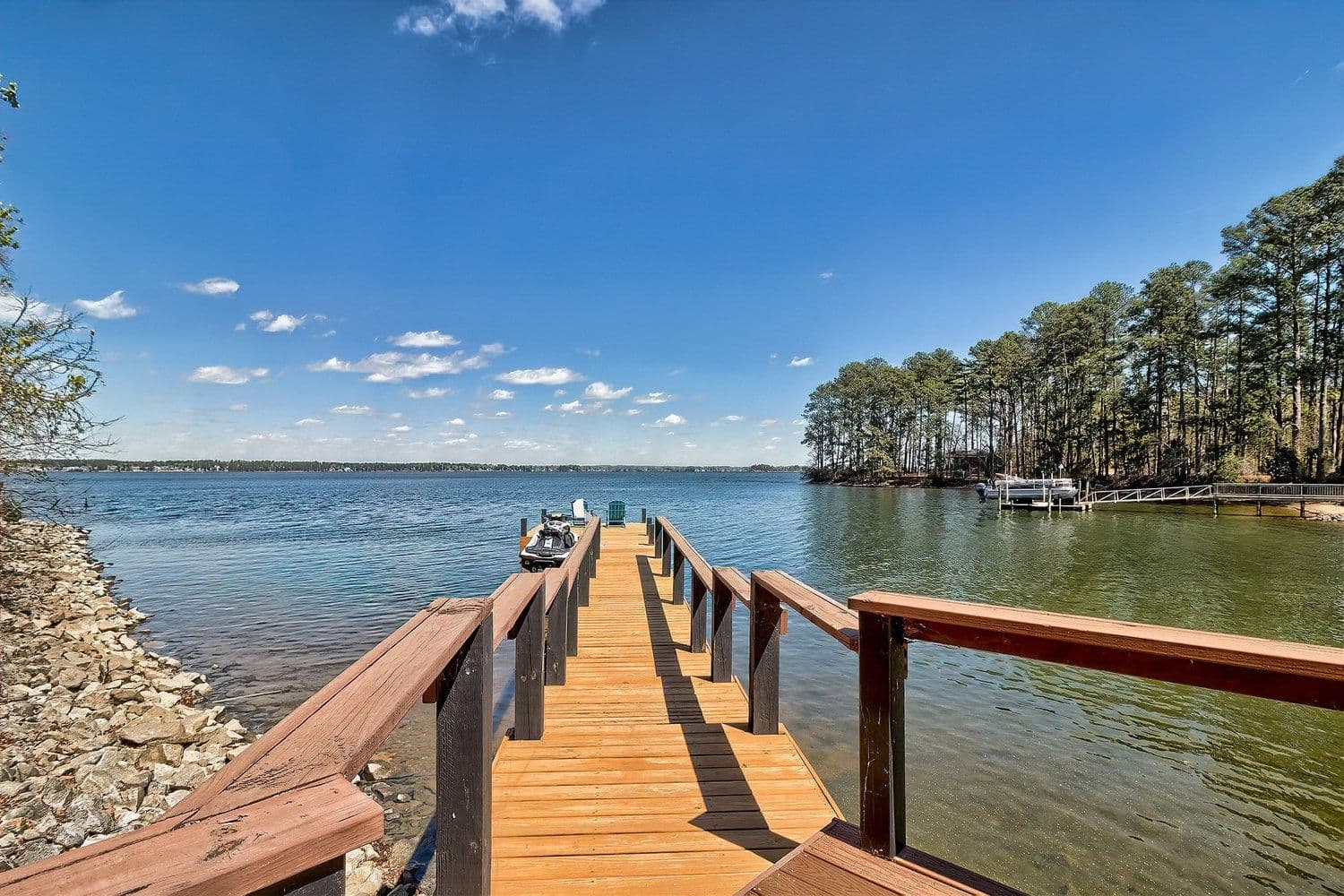
The photo on this post is lifestyle photography. It is not a Lake Murray address, and it is not a sold house.
Why many lake houses are on a tank and a field
Public sewer follows the roads and the neighborhoods that were built to it. A lot of Lake Murray coves, and a lot of the quieter roads between those coves, were built before a sewer line was the plan, or they sit where a line still has not come. The house got a tank and a drain field instead. That pattern shows up on the water and on inland lots near the water. It is common. It is not universal.
A newer street, a neighborhood closer to a town system, or a lot that was tied in later can be on public sewer. Two houses on the same cove can differ. An inland house near the lake can be on septic while a waterfront house down the road is on sewer, or the other way around. Ask about this address. The town name does not answer it. The photo of the dock does not answer it. "Lake Murray" does not answer it.
Say which lake word is true while you ask, because the yard you are protecting is different:
- Waterfront: the lot touches the water. The field, if there is one, has to be understood next to the shoreline, the dock path, and whatever you are not allowed to cover. Shoreline rules are a separate file from the septic file.
- Lake view: you can see the water. The lot does not touch it. You can still be on septic. You do not get a shoreline permit out of a tank.
- Water-access: a shared ramp or community dock. The system, if it is yours, is still yours to inspect. The shared ramp is not a private pier, and it does not tell you where the field is.
- Inland: an ordinary yard near the lake, and often the house where septic shows up because the lot had room and the sewer line did not. Inland is a real search. Do not skip the system because there is no dock.
A green lawn down to the water is a photograph. It is not a map of the lines. Stand in the yard and ask where the system is before you decide the grass is free to use.
What to ask before you treat the listing as the system
A remark that says "septic" is a starting point. It is not the file.
Ask out loud:
- Is this house on a private septic system, on public sewer, or on something the listing has not actually checked?
- Is the system on the lot you are buying, or does a shared arrangement show up in the documents? If the paperwork is unclear, that is a reason to slow down. I will not guess that it is shared or private.
- Where are the tank and the drain field, in the yard you can walk, not only on a sketch from another year?
- What sits on top of the field today: lawn, a driveway, a shed, a pool, trees, a parking spot for the boat?
- Who has the permit, the as-built if one exists, and the pumping records? A seller's memory is a clue. The paper is the check.
- Is there also a well? Public water and a private well are a different question from sewer and septic. Ask both. This post is the septic half.
If there is an HOA, read what it says about outbuildings, grading, and anything you would place in the yard. I will not tell you what an HOA allows. The documents answer that. An HOA rule is not the same paper as a county or SCDES requirement.
I will not invent a price difference between septic and public sewer. They are different weeks. Some buyers want the lot septic makes possible. Some buyers want a street where the utility is the city's. Say which one you mean before we tour ten of the other.
Inspection and pumping records
This is the step I will not skip with you. A general home inspection may stop at the house. A septic system can sit outside that scope the same way a dock can.
The buyer's inspection or due diligence window is written into the contract. Many Midlands contracts use a period of about 10 business days. Read the dates on yours. A septic look takes a person and a day inside that window. If the specialist cannot get there, that is a reason to talk about the dates, not a reason to guess.
Ask, in writing, before you rely on the report:
- Does the licensed home inspector include the septic system? If the answer is no, who pumps the tank and who maps the field?
- Will they pump the tank as part of the look, or only glance at a lid? A general inspection often does not pump a tank or map a drain field. Ask for the scope in words you can read.
- What will they look at: the tank, the lines they can locate, the field, and anything they can see about how the yard drains?
- What did the pumping records show: the dates, who did the work, and what they wrote down? A recent pump-out is a clue. It is not a clean bill I will sign. Ask the inspector what those records mean for this tank.
- What did they find, in a report you can keep, not in a sentence on the way to the car?
I am not the inspector. I will not invent a defect list, a remaining life, a tank size, or a pass or a fail. I will not invent how many years should sit between pump-outs. The inspector tells you what this system showed. If they recommend another specialist, that name is theirs, not a slogan I keep in a drawer.
Ask the owner what they know and what they have had pumped. Then put the paper next to the inspection. A story that the system has "always been fine" is not a record. If the seller cannot find a permit or a pumping history, that is information. We slow down.
The longer notes on what a lake inspection often leaves out, including the dock and the shoreline, are Lake Murray home inspections for buyers. Use that list too when the lot has more than a tank.
Where the field sits, including relative to the water
The drain field is the part buyers forget because it does not look like equipment. It looks like yard. On a lake lot, that yard is also how you get to the water, where you might want a porch, and where a car or a boat trailer wants to sit.
Walk it and ask:
- Where is the tank, and where do the lines run, relative to the house and relative to the shoreline or the view?
- What has to stay off the field? Vehicles, a shed, a pool, an addition, and deep-rooted plantings are the kinds of questions to put in front of the inspector. I will not give you a list of what is allowed. The inspector and the agency answer for this property.
- Does the yard slope toward the water, toward a neighbor, or toward the field? Ask what the inspector saw about drainage. I will not guess a flood story from a pretty dock.
- If you want to add a path, a fire pit, or a guest parking pad, does that plan land on the field? Find the lines before you fall in love with the spot.
- If the lot touches the water, which questions belong to the septic file and which belong to the shoreline file? They are not the same paper.
On Lake Murray, Dominion Energy manages residential shoreline permits. That file is about the dock and the shoreline, when the lot has them. It is not the septic permit. Confirm shoreline questions with Dominion when the lot touches the water. Confirm septic distances, including how close the field may sit to the water on this parcel, with the county and with SCDES. I will not invent a setback in feet, a buffer width, or a fine. The waterfront checklist is the shoreline list. This section is the field.
A winter visit when the grass is thin can show a wet spot a summer photo hides. Ask to see the yard, not only the view from the dock. If you cannot locate the field before you write, say so. Buying a lake house without knowing where the field is means the next porch plan is a guess.
Bedrooms, additions, and what the permit is for
The bedroom count is not only a furniture question. On a septic house, the permit is tied to how the house is used. A room you would sleep in, a bonus room, a loft, or an office someone will actually use as a bedroom can matter. An addition you are already sketching can matter more.
Ask before you plan the work:
- What bedroom count is the house being sold as, and what count is on the septic permit if you can get the permit?
- Does a finished room, a basement, or a space over the garage show up in one count and not the other? Ask the county and SCDES which count this property has to meet. I will not reconcile them for you with a rule I typed from memory.
- If you want to add a bedroom, a bath, or a guest suite, what would this lot and this system require? The answer is for this pin. A neighbor's project is not your approval.
- Where would that addition sit relative to the tank and the field? A permit question and a location question can both stop the plan. Ask both.
- Who has to sign off before you build: the county, SCDES, an HOA if there is one, and, if the work is near the shoreline, the office that handles that shoreline? I help you make the list of questions. I do not give legal advice, and I do not pull a permit for you.
I will not state a gallon-per-bedroom figure, a minimum field size, or a fee. I will not tell you an addition is "usually fine" on Lake Murray. Confirm the requirements with the county and with SCDES for the specific property. If they cannot answer from the file yet, that is a reason to wait, not a reason to write the offer as if the sketch is already allowed.
If the house is for a growing family, the floor plan and the permit have to be read together. The family post, which still does not invent a bedroom formula, is buying a Lake Murray home for a growing family. A beautiful dock does not add a permitted bedroom.
The county and SCDES, for this property
Lake Murray wraps more than one county. Lexington, Richland, Newberry, and Saluda can all show up, depending on the address. The office you call for a septic question can follow that pin. SCDES, the South Carolina Department of Environmental Services, is the state environmental agency. The county still has a role. I will not tell you which desk answers which question for every cove. We look up this property and we ask.
Do this for the address you are actually buying:
- Confirm the county on the parcel. Taxes, services, and records follow the pin. I will not invent a millage or a tax bill.
- Ask the county what it needs to see for this septic system, and where the permit file lives.
- Ask SCDES what it requires for this property: the permit, the location of the tank and the lines, the bedroom count, and anything an addition would trigger. Use their answer, not a summary from a listing.
- Put the inspector's report next to those answers. If they disagree, ask again. I will not pick a winner from the driveway.
- If the lot touches the water, keep the Dominion shoreline questions on their own list. Do not hand a dock question to the septic office and call it done.
School assignment is its own lookup if anyone in the house needs it. A septic system does not move the line. Confirm the school for the specific address with the district. I name districts on the town posts. I do not rank schools.
I will not invent a replacement cost, a pumping bill, or a monthly fee and call it Lake Murray. If a number matters, it comes from the inspector, the pumper, or the agency, for this house.
How I start the search
Fill out the questionnaire on the buy page. We complete a buyer profile and sign a buyer agency agreement before we tour. Tell me, in plain words:
- Whether septic is acceptable, or whether you need public sewer.
- Whether the lot has to touch the lake, whether you only need to see it, or whether inland is the week if the house and the system are right.
- That we will ask a licensed inspector whether septic is in scope, and who looks at the tank and the field if it is not. A listing remark is not that confirmation.
- That we will ask for pumping records and for the permit, and that we will confirm bedroom count and any addition with the county and with SCDES for that pin.
- The county, and, if it matters in your house, the school assignment you need me to confirm.
If you need a local lender, I recommend Jason Burns at Guild Mortgage, (803) 210-7999. He can tell you what the file needs. I will not quote a rate, a fee, or a payment. I will not tell you a product is available because another family used something like it.
If you are selling a house to make this one possible, those are two calendars. Start the sale on the sell page. Say so before we write an offer that depends on a date you do not have yet. If that sale is itself a lake house, the pricing plan is how to price your Lake Murray home to sell.
South Carolina is an attorney-closing state. A licensed South Carolina attorney oversees the closing, the deed, and the settlement documents. I walk you through the paperwork. I do not give legal advice.
Call or text (803) 569-7595. Tell me whether septic is part of the house you can live with, and which lake word has to be true. I'll pull what we need and call you. We'll check the tank, the field, and the permit on the address you are actually buying.
Questions
Why are many Lake Murray homes on septic?
Public sewer follows the roads and neighborhoods that were built to it. A lot of coves, and a lot of quieter roads between them, were built with a tank and a drain field because a sewer line was not the plan, or still is not there. Some streets around the lake are on public sewer. Ask about this house. The cove name and the town name do not answer it.
What should I ask before buying a Lake Murray home on septic?
Ask whether this house is on septic or public sewer, where the tank and the drain field are, and how the field sits relative to the water, the driveway, and any place you want to build. Ask for pumping records and for a septic inspection, not only a general home inspection. Ask whether the bedroom count on the permit matches the house. Confirm the requirements for this property with the inspector, the county, and SCDES. I will not invent a cost, a setback, or a pumping schedule.
Does a home inspection cover the septic system?
Do not assume it does. A general home inspection often does not pump a tank or map a drain field. Ask the licensed inspector what is in scope. If the report stops at the house, ask who should look at the tank, the lines, and the field, and whether that look includes a pump-out. I am not the inspector, and I will not invent a pass or a fail.
Why does the drain field location matter near the water?
The field is part of the yard, and on a lake lot the yard is also the path to the water. Ask where the tank and the lines sit relative to the shoreline, the dock path, trees, a driveway, and any spot you want to use. A green lawn can be the field. Confirm distances and limits for this property with the inspector and with the county and SCDES. I will not invent a setback in feet. Shoreline rules, if the lot touches the water, are a separate file.
Can I add a bedroom to a Lake Murray house on septic?
Ask before you plan the addition. A bonus room, a loft, or a space you would sleep in can change the bedroom count the system is permitted for. An addition can change what the lot can support. Confirm what this permit allows, and what a change would require, with the county and with SCDES for this property. I will not state a gallon rule or a field size and call it yours.
How do I start a septic search with Lauren?
Fill out the questionnaire on the buy page. We complete a buyer profile and sign a buyer agency agreement before we tour. Tell me whether the house has to be on septic, and whether the lot has to touch the lake. If you need a local lender, I recommend Jason Burns at Guild Mortgage, (803) 210-7999. Call or text (803) 569-7595.
Want to apply this to your street?
Would you like me to apply this to your street? Let me know if you have any questions!